Biomass plastics using the mass balance approach adopted in select models of Sony’s BRAVIA 9 II televisions
2026.06.01
Mitsui Chemicals, Inc.
Mitsui Chemicals, Inc. (Tokyo: 4183; President & CEO: ICHIMURA Satoshi) is expanding its lineup of derivatives made from biomass naphtha—namely biomass chemicals and biomass plastics—under the BePLAYERTM brand as part of its efforts to promote the greater use of biomass in society toward solving the issue of global warming. We are pleased to announce that biomass plastics have been adopted for certain models*1 of Sony Corporation’s BRAVIA 9 II televisions, and Mitsui Chemicals is contributing to this initiative through the supply of raw materials in the supply chain*2.
This initiative was realized through collaboration among companies across the supply chain as part of “Creating NEW from reNEWable materials” a joint project newly launched by Sony and Mitsubishi Corporation. The project follows announcement on February 6, 2026, that it aims to reduce the use of virgin plastic derived from fossil resources to zero through the introduction of renewable plastics.
*1 Biomass plastics are used in certain internal components of all models of BRAVIA 9 II except the 115V-inch model. In addition, they are also used in the rear cover of the 65V-inch model.
*2 Mitsui Chemicals contributes by biomass-converting raw materials for polycarbonate resin and flame-retardant materials.
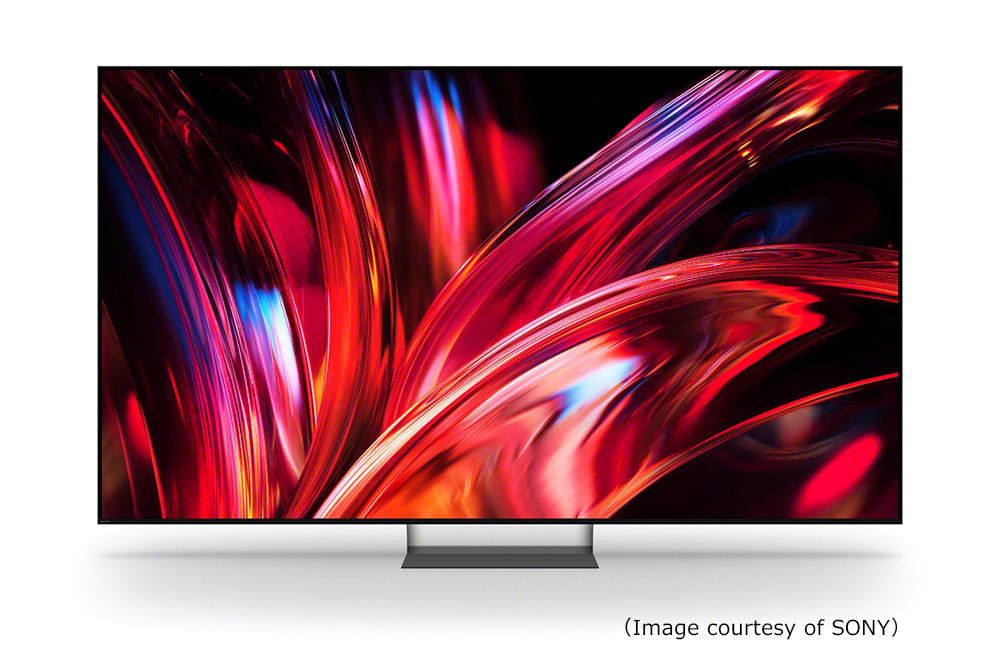 SONY’s BRAVIA 9 II
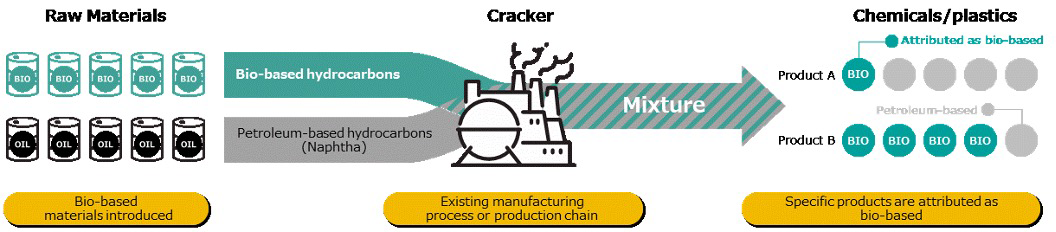
The mass balance approach
The Ministry of the Environment’s Roadmap for Bioplastics Introduction defines the mass balance approach as “A method in which, during the process of turning raw materials into final products and the distribution process (chain of custody), raw materials with certain properties (e.g., bio-based raw materials) are mixed with raw materials that do not have the properties (e.g., fossil-based raw materials); thus, the properties are assigned to a portion of the product according to the amount of input of the raw materials with those properties.”
The physical properties of plastics and chemical products made under the mass balance method do not differ from their fossil-derived counterparts. The mass balance method also allows for the use of biomass in the production of materials where it has traditionally been difficult. Therefore, the mass balance method is a significant means of increasing the adoption of biomass in society and realizing a carbon neutral society. As of June 2025, around 50 product groups across the Mitsui Chemicals Group have already switched to the use of biomass resources based on the mass balance approach. Mass balance also has a crucial role to play in chemical recycling, which is being rolled out as a recycling solution that will pave the way for a circular economy. Here, too, the Mitsui Chemicals Group offers plastics and chemical products derived from chemical recycling in around 50 product groups.
BePLAYER™

Under BePLAYERTM, we will help the transition to bio-based society to solve the problem of climate change. We will further the development of bio-based products via the mass balance and segregation methods alike, along with other products and technologies contributing to carbon neutrality, in an effort to substantially assist in reducing society’s greenhouse gas emissions.