The Physical Internet Realization Council’s Chemicals Working Group has initiated the development of guidelines to promote palletization
2026.02.19
Mitsui Chemicals, Inc.
The Chemicals Working Group (Chairman: Professor YANO Yuji, Ryutsu Keizai University) of the Physical Internet Realization Council, which is led by the Ministry of Economy, Trade and Industry (METI) and the Ministry of Land, Infrastructure, Transport and Tourism (MLIT), has commenced the development of guidelines aimed at promoting palletization* within the chemical industry as part of broader efforts to address pressing logistics challenges, including the acute shortage of truck drivers.
* “Palletization” refers to a logistics method in which goods are placed on pallets and subsequently handled, transported, and stored as unified units using equipment such as forklifts.
The Chemicals Working Group currently includes 83 members (82 companies and 1 university), most of them consignors and logistics providers, and sees participation from the Japan Chemical Industry Association, the Japan Petrochemical Industry Association, and several relevant divisions from METI and MLIT, among other bodies. Mitsui Chemicals, Inc., Mitsubishi Chemical Corporation, Tosoh Corporation and Toray Industries, Inc. serve as the Group’s joint secretariat.
For further information, please see the following materials.
Physical Internet Realization Council
Chemicals Working Group
Physical Internet Realization Council’s Chemicals Working Group Begins Formulating Palletization Promotion Guidelines to Solve Chemical Industry Logistics Challenges
The Chemicals Working Group*1 (WG) of the Physical Internet Realization Council*2 led by the Ministry of Economy, Trade and Industry (METI) and the Ministry of Land, Infrastructure, Transport and Tourism (MLIT) has started drawing up guidelines to encourage palletization in the chemical industry.
Amid an increasingly serious shortage of truck drivers, reducing drivers’ cargo waiting time for loading/unloading at logistics sites has become an urgent issue. Palletization is attracting attention as one effective measure being pursued to address these issues.
In light of this social situation, the Chemicals WG is putting its weight behind efforts to further popularize integrated palletization, particularly by developing associated guidelines. Specifically, these guidelines will address the various challenges faced at logistics sites, such as switching from manual cargo handling to palletization, standardizing pallets for drum handling, dealing with small-lot shipments not easily consolidated into single-pallet units, and handling long items that do not readily conform to standard pallet specifications.
Background and purpose of creating the guidelines
The Chemicals WG aims, through its activities to promote palletization, to achieve sustainable logistics by reducing the workload of drivers, cargo handlers and other logistics workers via unit-level handling, which serves as the foundation of the physical internet.
Specifically, the Chemicals WG is addressing the issue from the following four perspectives, with the ultimate goal of achieving integrated palletization*3.
- Safety: Liberating workers from manual cargo handling will lead to a reduction in occupational injuries and help alleviate the physical burden.
- Logistics stability: Securing workers of all ages and genders will become easier.
- Quality improvements: Opportunities for damage to external packaging can be minimized.
- Streamlining: Palletization will help to improve operational efficiency.
Environmental awareness
Under Article 42 of the Logistics Efficiency Act, consignors must strive to reduce driver waiting times and improve loading efficiency when entrusting the transportation of cargo and during cargo handover. Palletization is crucial to addressing this requirement.
While a 2025 survey conducted by the Chemicals WG showed growing use of palletization compared to the previous year, the level remains insufficient, and further improvement is still required.
The Chemicals WG therefore analyzed the factors impeding palletization in the chemical industry and put together the following set of measures to address them.
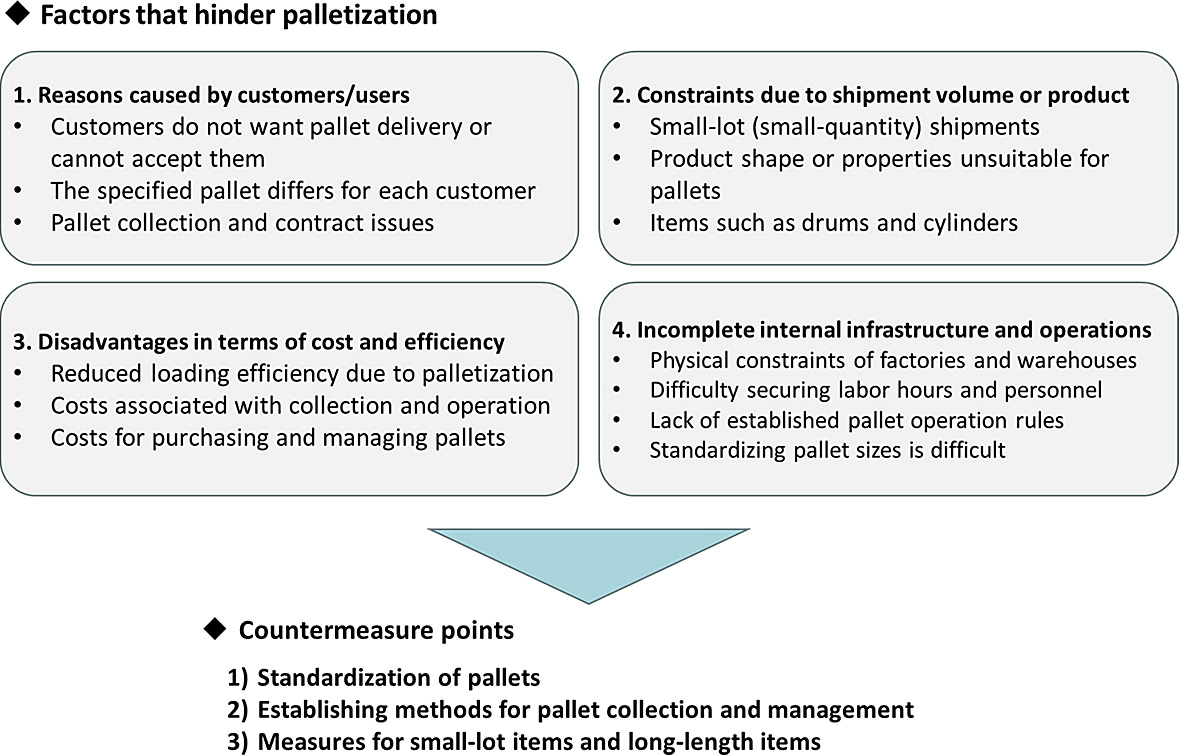
Focusing on the points above, the Chemicals WG intends to draw up guidelines to improve safety and productivity in chemical logistics, as well as reduce the burden on drivers, thereby contributing to the optimization of the entire supply chain.
*1 Chemicals Working Group
Chair: Professor YANO Yuji, Ryutsu Keizai University
Secretariat: Mitsubishi Chemical, Mitsui Chemicals, Tosoh, Toray
As of December 2025, participants in this working group include 83 member organizations (82 companies and one university), most of them consignors and logistics providers, along with the Japan Chemical Industry Association, the Japan Petrochemical Industry Association and relevant divisions within METI and MLIT.
Announcement on December 20, 2023: Voluntary Action Plan for the Proper Management and Productivity Improvement of Chemical Logistics
https://www.cas.go.jp/jp/seisaku/buturyu_kakushin/jk_pdf/28.pdf
*2 Physical Internet Realization Council
An organization established by METI and MLIT in October 2021 to formulate a roadmap for achieving a physical internet in Japan.
https://www.meti.go.jp/shingikai/mono_info_service/physical_internet/index.html
*3 Integrated palletization
A logistics method in which goods are transported on the same pallet throughout all handling stages, from the shipping origin to the delivery destination, without intermediate reloading.
Draft Operational Guidelines
1. Standardization of pallets
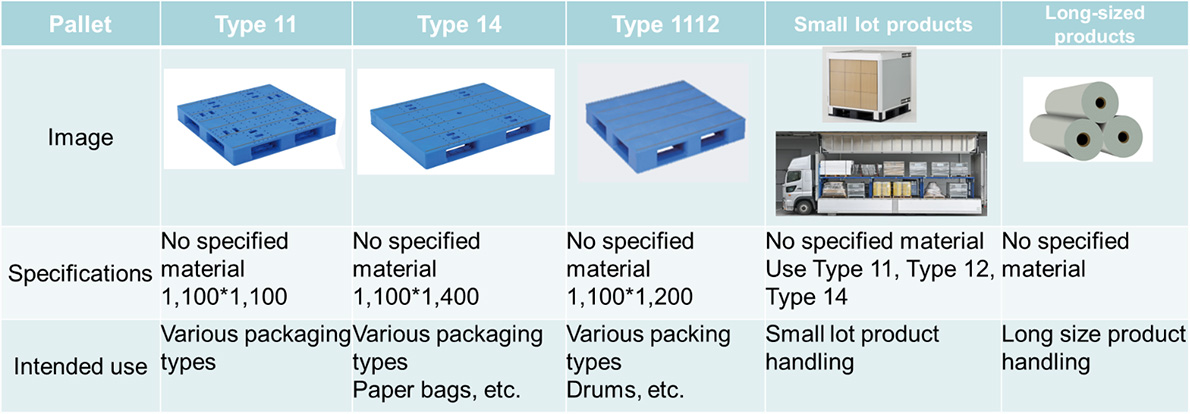
- Pallet types 11, 14 and 1112 will be the standard.
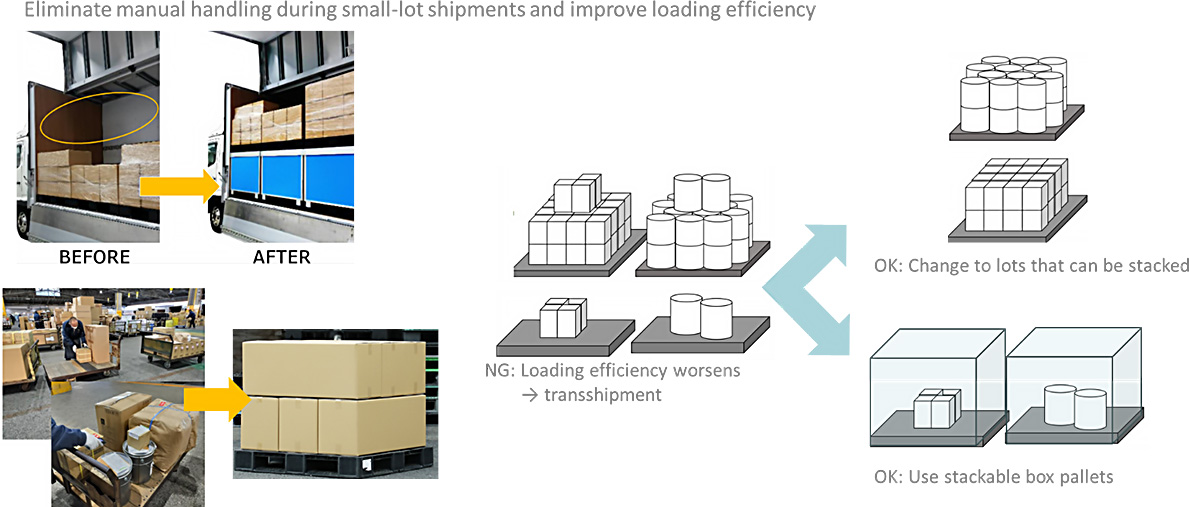
- In the case of small-lot products, companies are to make efforts to ensure that orders are placed and accepted in single-pallet units, as far as possible. Box pallets or similar load carriers are to be used when transporting small-lot shipments. The use of fold decks and similar load carriers is also recommended.
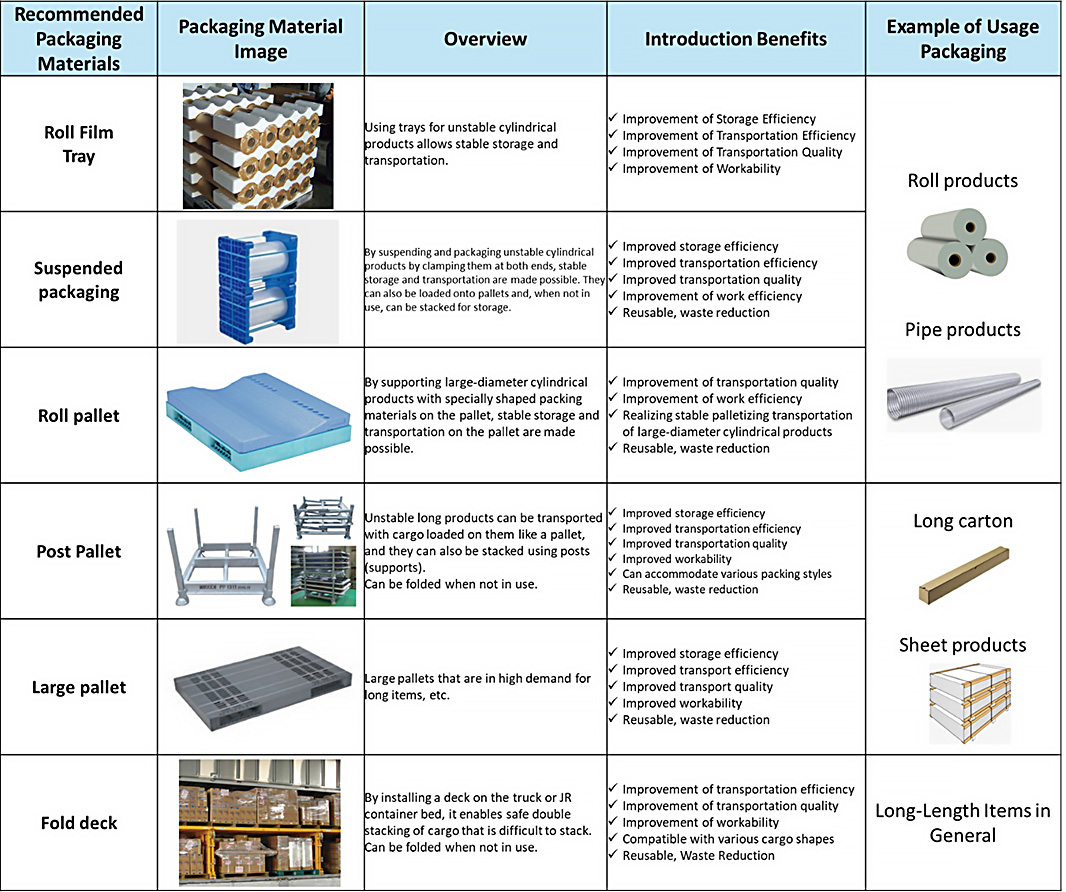
- The use of easily handled load carriers for long items is encouraged.
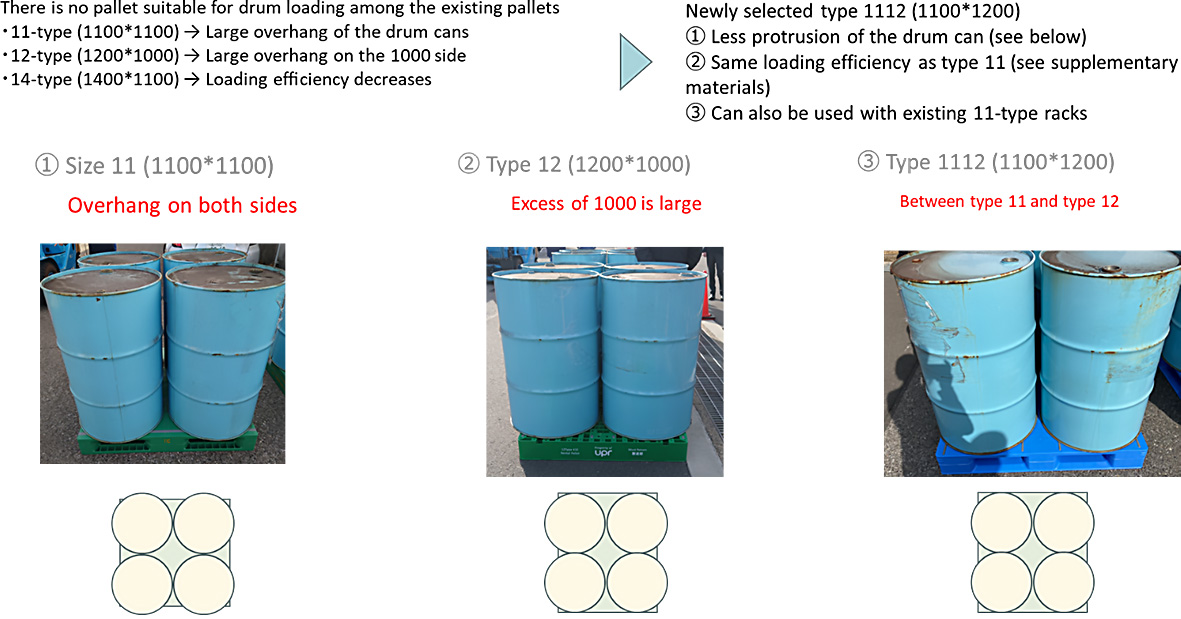
*Background to consideration of the type 1112 pallet
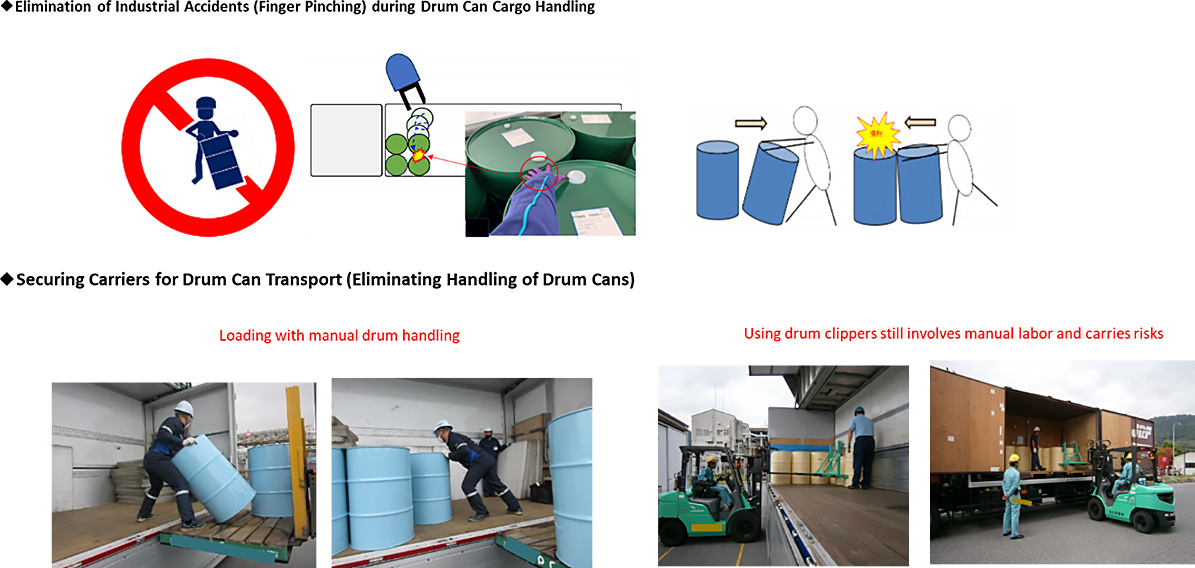
- Cargo handling of drums in particular often requires manual handling or use of a drum grabber. The new type 1112 pallet, which matches drum sizes and ensures loading efficiency, has been chosen as a means of eliminating finger entrapment and other occupational injuries during handling, and securing more workers for drum transportation by eliminating the need for direct handling of drums.
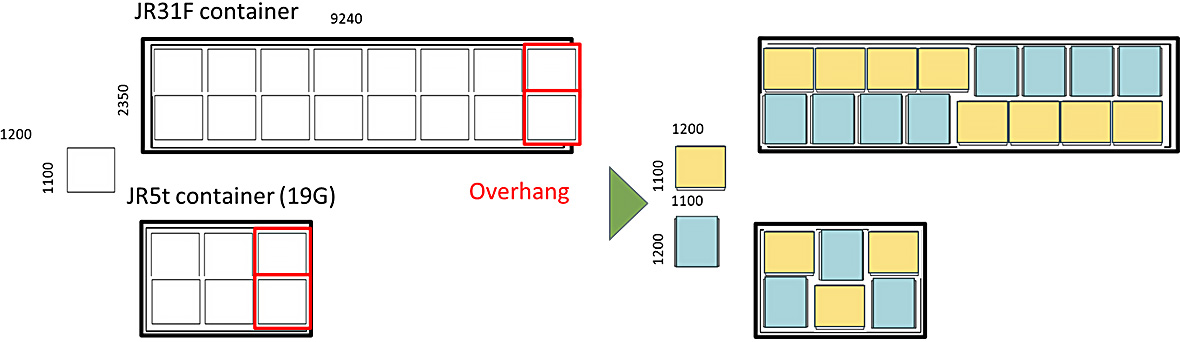
◆ Loading method using Type 1112 pallets
By adopting four-way entry pallets and adjusting the loading orientation, it is possible to load the same number of pallets as with Type 11 pallets.
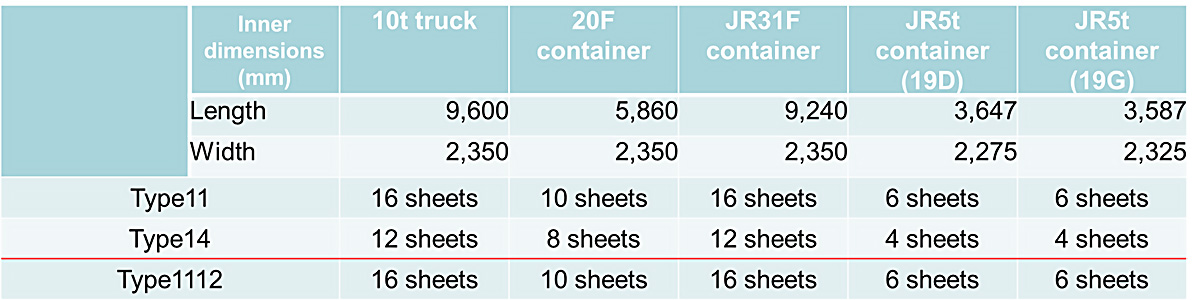
◆ Number of pallets that can be loaded in each container
2. Establishment of methods for pallet collection and management
- As standardization progresses, companies should pursue the efficient collection of pallets by making use of pallet leasing services and pallet collection networks.
- Companies should comply with MLIT recommendations for the use of pallets.
3. Measures for small-lot shipments and long items
Small-lot handling
- Single-pallet units should form the basis of orders, as a general rule.
- For orders less than a single pallet, companies should collaborate with logistics providers to improve loading efficiency by using load carriers such as box pallets and truck decks.
Recommended load carriers for transporting long items
- Companies should pursue integrated palletization by using the recommended load carriers, even in the case of long items that are harder to handle.
■ References
- July 29, 2025: Industry Group Launches Collaborative Logistics Demonstration Test Using Rail Transport in Tokai and Chugoku Regions in Effort to Solve Logistics Issues in Chemical Industry
https://jp.mitsuichemicals.com/content/dam/mitsuichemicals/sites/mci/documents/release/2025/250729e.pdf - June 25, 2025: Physical Internet Realization Council’s Chemicals Working Group Reported the FY 2025 Action Policy
https://jp.mitsuichemicals.com/content/dam/mitsuichemicals/sites/mci/documents/release/2025/250625e.pdf - December 23, 2024: Physical Internet Realization Council’s Chemicals Working Group Runs Demonstration Test to Find Effects of Collaborative Logistics
https://jp.mitsuichemicals.com/content/dam/mitsuichemicals/sites/mci/documents/release/2024/241223_1e.pdf - June 11, 2024: “Physical Internet Realization Council’s Chemicals Working Group to Conduct Demonstration Test for Collaborative Logistics in the Kanto–Tokai Region”
https://jp.mitsuichemicals.com/content/dam/mitsuichemicals/sites/mci/documents/release/2024/240611.pdf (Japanese only) - June 13, 2023: “Establishment of a Chemicals Working Group in the Physical Internet Realization Council”
https://jp.mitsuichemicals.com/content/dam/mitsuichemicals/sites/mci/documents/release/2023/230613e.pdf