The Physical Internet Realization Council’s Chemicals Working Group Establishes Standard Guidelines for Chemicals Logistics Information
Introducing the industry’s first data integration platform to address a shortage of transportation capacity
2026.06.29
Mitsui Chemicals, Inc.
The Chemicals Working Group (Chairman: Professor YANO Yuji, Ryutsu Keizai University) of the Physical Internet Realization Council, which is led by the Ministry of Economy, Trade and Industry (METI) and the Ministry of Land, Infrastructure, Transport and Tourism (MLIT), has established the Standard Guidelines for Chemical Logistics Information for the standardization of data in chemical logistics, with the aim of addressing the shortage of transportation capacity caused by the “2024 problem” in logistics, and expanding collaborative logistics in the chemical industry.
The Chemicals Working Group currently includes one university and 86 companies, most of them consignors and logistics providers, and sees participation from the Japan Chemical Industry Association, the Japan Petrochemical Industry Association, and several relevant divisions from METI, MLIT, and the Ministry of Health, Labour and Welfare, among other bodies. Mitsui Chemicals, Inc., the Mitsubishi Chemical Group, Tosoh Corporation, and Toray Industries, Inc. serve as the joint secretariat.
For further information, please see the following materials.
Physical Internet Realization Council
Chemicals Working Group
Establishment of Standard Guidelines for Chemical Logistics Information Introducing the industry’s first data integration platform to address transport capacity shortages
~ Aiming to expand collaborative logistics across the industry and achieve its social implementation ~
The Chemicals Working Group*1 of the Physical Internet Realization Council*2 – a body led by the Ministry of Economy, Trade and Industry (METI) and the Ministry of Land, Infrastructure, Transport and Tourism (MLIT) – has established the Standard Guidelines for Chemical Logistics Information (hereinafter, “these Guidelines”) to standardize data for chemical logistics, with the participation of 21 chemical manufacturers*3. These Guidelines aim to address transport capacity shortages stemming from the “2024 problem” in logistics and to expand collaborative logistics in the chemicals industry. Demonstration testing will begin in fiscal 2026, with social implementation targeted for fiscal 2028.
Background to this initiative
In chemical logistics, the “2024 problem” has further exacerbated driver shortages and reduced transportation capacity. In particular, the transportation of hazardous materials depends on personnel with specialized knowledge, and it is not easy to secure substitute staff. If responses are delayed further, it may no longer be possible to stably secure the necessary transportation capacity, which could affect both the stable supply of chemical products and corporate activities.
Promoting collaborative logistics is an essential response to the shortage of transportation capacity, but differences in the definition and format of logistics data between companies pose a major barrier. One factor hindering the expansion of collaborative logistics initiatives is the fact that individual adjustments are required each time data is linked between shippers and logistics providers. In light of these circumstances, the Chemicals Working Group has developed these Guidelines as a foundation for ensuring the sustainability of chemical logistics by establishing cross-industry data standardization and an information-sharing infrastructure.
Overview of the Standard Guidelines for Chemical Logistics Information
These Guidelines build on the government’s proposed logistics information standards while supplementing and fleshing out the information needed for the practical chemical logistics operations. Chemical logistics involves a wide range of industry-specific information, such as packaging form, hazardous materials classification, temperature conditions, and transportation services. These Guidelines reflect those requirements and systematically set out the common data items and business processes that can be used across The industry. The main features are as follows.
① Standardizing data items specific to chemical logistics
- These guidelines define data items corresponding to logistics requirements specific to chemicals, such as information management and transportation conditions required for the transport of hazardous materials. In addition, they standardize data items and formats that had previously differed from one company to another, reducing the burden of case-by-case adjustments between shippers and logistics providers.
② Introducing a data integration platform that supports collaborative chemical logistics
- The chemical logistics industry will, for the first time, introduce a data integration platform that converts existing data held by each company into a standardized format and enables centralized data management and integration. This will transform the conventional one-to-one (1:1) model of data exchange between a single shipper and a single logistics provider into a many-to-many (N:N) framework in which multiple shippers and logistics providers can exchange information simultaneously, enabling efficient and flexible data linkage while leveraging existing data held by each company.
This will transform operations that have traditionally relied on company-specific coordination and person-dependent responses into standardized and highly reproducible information exchange, thereby establishing a platform that supports the expansion of collaborative logistics.
Demonstration Test and Future Developments
Second half of FY2026 (October 2026 to January 2027 or thereabouts)
A demonstration of data linkage will be conducted to verify whether these Guidelines function effectively in actual collaborative logistics operations. In addition, operational challenges will be identified and the operating rules reviewed as necessary. The demonstration is set to evaluate and implement a collaborative transportation model that combines pickup, trunk-line transportation, and delivery on a transport lane originating in Hiroshima and destined for the Kansai region.
Around FY2028
Based on the results and challenges identified through the demonstration, the guidelines and operating rules will be further refined and enhanced. Building on these efforts, the initiative will be expanded to other regions, including the Chukyo and Kanto areas, with the aim of achieving the social implementation of collaborative logistics.
Future targets
In addition to the continuous improvement of operating rules, participation by a broader range of companies will be promoted, and the scope of application will be expanded to other modes of transportation, including maritime and rail transport. With an eye toward wider-area deployment and inter-industry collaboration, these efforts will support the realization of diverse collaborative logistics models and their sustainable development (Figure 1).
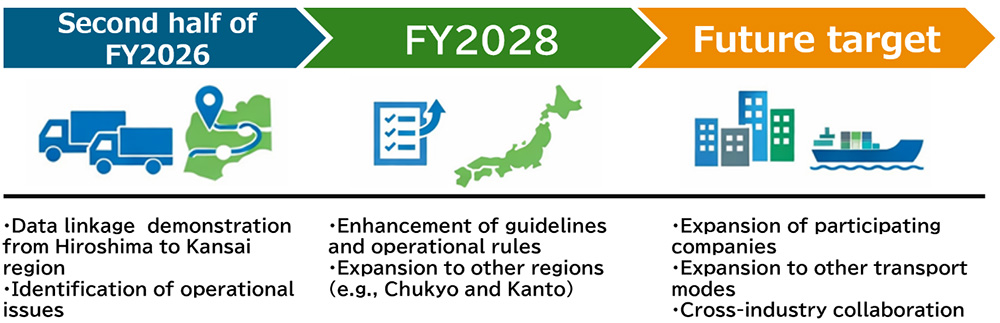 Figure 1: Demonstration test and future developments
Furthermore, AI-based matching will leverage transport request and performance data standardized under these Guidelines to automatically identify optimal combinations based on factors such as transportation requirements, load consolidation feasibility, and vehicle characteristics. This will automate conventional person-dependent coordination and contribute to higher vehicle utilization and reduced empty runs, supporting the realization of efficient and sustainable collaborative logistics (Figure 2).
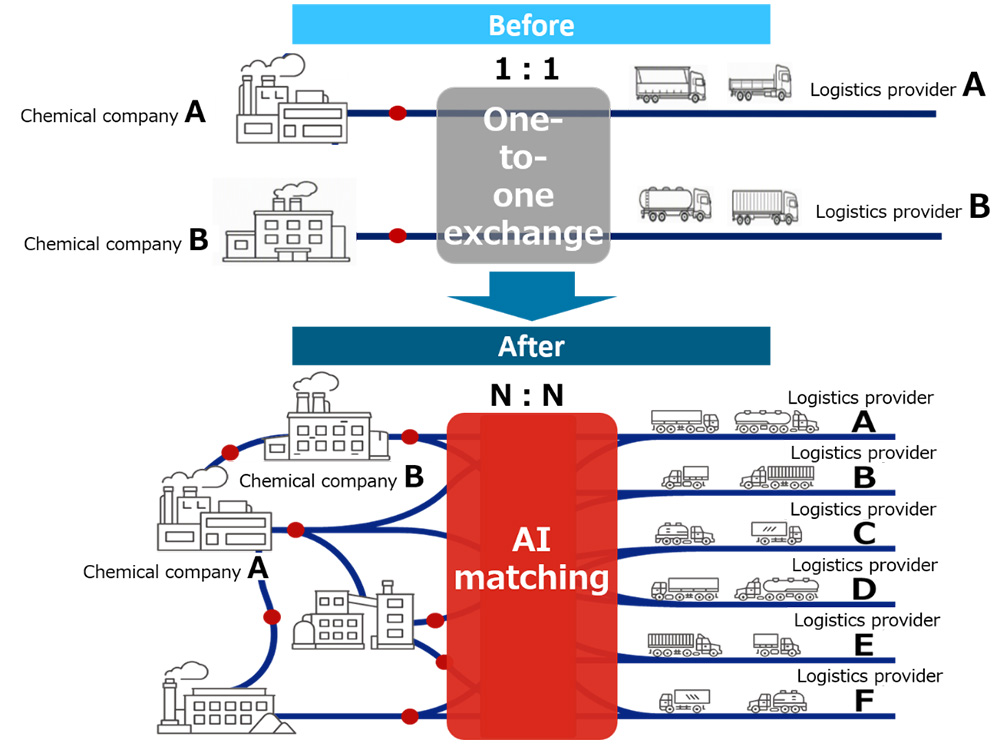 Figure 2: Image of the collaborative logistics envisioned by the Chemicals Working Group
*1 Chemicals Working Group
Chairman: Professor YANO Yuji, Ryutsu Keizai University
Secretariat: Mitsubishi Chemical, Mitsui Chemicals, Tosoh, Toray
As of May 2026, participants in this working group include 87 member organizations (86 companies and one university), consisting primarily of consignors and logistics providers, along with the Japan
Chemical Industry Association, the Japan Petrochemical Industry Association and relevant divisions within METI and MLIT.
Announcement on December 20, 2023: Voluntary Action Plan for the Proper Management and Productivity Improvement of Chemical Logistics
https://www.cas.go.jp/jp/seisaku/buturyu_kakushin/jk_pdf/28.pdf
*2 Physical Internet Realization Council
An organization established by METI and MLIT in October 2021 to formulate a roadmap for achieving a physical internet in Japan (Japanese only).
https://www.meti.go.jp/shingikai/mono_info_service/physical_internet/index.html
*3 Companies participating in the project to develop these Guidelines
A total of 21 companies, including Asahi Kasei, Kuraray, Sumitomo Chemical, Sekisui Chemical, Daicel, Teijin, Toagosei, Tosoh, Toray, Mitsui Chemicals, Mitsubishi Chemical and Resonac.
■ References
- April 7, 2026, Physical Internet Implementation Council’s Chemicals Working Group to Promote Initiatives Toward the Proper Management of Truck Drivers’ Ancillary Work and Safety Improvements in Tanker Truck Loading and Unloading
https://jp.mitsuichemicals.com/en/release/2026/2026_0407/index.htm - March 24, 2026: Chemicals Working Group Demonstrates Collaborative Rail Freight, Confirming Feasibility of Continuous Round-Trip Operations With Same Container
https://jp.mitsuichemicals.com/en/release/2026/2026_0324/index.htm - February 19, 2026: The Physical Internet Realization Council’s Chemicals Working Group Initiates the Development of Guidelines to Promote Palletization
https://jp.mitsuichemicals.com/en/release/2026/2026_0324/index.htm - July 29, 2025: Industry Group Launches Collaborative Logistics Demonstration Test Using Rail Transport in Tokai and Chugoku Regions in Effort to Solve Logistics Issues in Chemical Industry
https://jp.mitsuichemicals.com/en/release/2025/2025_0729/index.htm - June 25, 2025: Physical Internet Realization Council’s Chemicals Working Group Reported the FY 2025 Action Policy
https://jp.mitsuichemicals.com/en/release/2025/2025_0625_1/index.htm - December 23, 2024: Physical Internet Realization Council’s Chemicals Working Group Runs Demonstration Test to Find Effects of Joint Logistics
https://jp.mitsuichemicals.com/en/release/2024/2024_1223_1/index.htm - June 11, 2024: Physical Internet Realization Council’s Chemicals Working Group to Conduct Demonstration Test for Collaborative Logistics in the Kanto and Tokai Regions (Japanese only)
https://jp.mitsuichemicals.com/jp/release/2024/2024_0611/index.htm - June 13, 2023: Establishment of a Chemicals Working Group in the Physical Internet Realization Council—Promoting joint logistics in the chemical industry to tackle the "2024 problem"
https://jp.mitsuichemicals.com/en/release/2023/2023_0613/index.htm