The Physical Internet Realization Council's Chemicals Working Group has visualized the nationwide logistics flow of dangerous goods for the first time in the chemical industry
2026.06.29
Mitsui Chemicals, Inc.
The Chemicals Working Group (Chairman: Professor YANO Yuji, Ryutsu Keizai University) of the Physical Internet Realization Council—a body led by the Ministry of Economy, Trade and Industry (METI) and the Ministry of Land, Infrastructure, Transport and Tourism (MLIT)—has visualized the nationwide logistics flow of dangerous goods for the first time in the chemical industry by compiling logistics data from participating consignor companies.
The Chemicals Working Group currently includes one university and 86 companies, most of them consignors and logistics providers, and sees participation from the Japan Chemical Industry Association, the Japan Petrochemical Industry Association, and several relevant divisions from METI, MLIT, and the Ministry of Health, Labour and Welfare, among other bodies. Mitsui Chemicals, Inc., the Mitsubishi Chemical Group, Tosoh Corporation, and Toray Industries, Inc. serve as the joint secretariat.
For further information, please see the following materials.
Physical Internet Realization Council
Chemicals Working Group
A First in the Chemical Industry: Visualizing the Nationwide Logistics Flow of Dangerous Goods
—Consignors and Logistics Providers Join Forces to Ensure Medium- to Long-Term Stability of Dangerous Goods Transportation—
The Chemicals Working Group (hereinafter “Chemicals WG”)*1 of the Physical Internet Realization Council*2—a body led by the Ministry of Economy, Trade and Industry (METI) and the Ministry of Land, Infrastructure, Transport and Tourism (MLIT)—collected logistics performance data from 15 participating consignor companies*3 visualized the logistics flow of dangerous goods on a nationwide scale or the first time. The targets are packaged items other than bulk goods. The data was collected in a uniform granularity and a common format. This has clarified the logistics structure of the industry as a whole, which had previously been difficult to grasp. Following this, consignors and logistics providers jointly began exploring measures aimed at ensuring the medium- to long-term stability of dangerous goods transportation.
Project Background and Purpose
The transportation and handling of dangerous goods require specialized knowledge (including relevant laws and regulations, physical properties, and procedures for responding to incidents) as well as extensive experience. Given the industry’s vulnerability to changes in the logistics environment, such as driver shortages in recent years, ensuring the medium- to long-term stability of dangerous goods transportation in the chemical industry has become an urgent priority. There are limits to what individual companies can do to address these challenges on their own, driving the need for industry-wide initiatives. However, until now, it has not been possible to gain a comprehensive understanding of the actual state of logistics within the industry, making it difficult to identify priority issues and develop concrete measures.
Against this backdrop, this project aimed to visualize the logistics structure of the entire industry on a nationwide scale by encouraging major consignor companies of dangerous goods to collaborate and bring together their respective logistics performance data, leading to the development of effective measures.
Project Overview
The 15 consignor companies participating in the Chemicals WG standardized data items and definitions and then provided one year’s worth of their logistics performance data. Analysis and visualization of this data was commissioned to Professor YANO Yuji of Ryutsu Keizai University (Chairman of the Chemicals WG) and Professor ISHIKAWA Tomoyasu of Fukushima University, allowing the consignors to share the current logistics structure.
In addition, to promote consideration of measures within the industry on an ongoing basis, the data was organized in a format that can be shared even among competing consignors, while ensuring compliance with the Antimonopoly Act.
Structure Revealed Through Visualization and Analysis
- The findings revealed a clear imbalance in transport volumes, characterized by high freight volumes moving from Western Japan to the Chukyo and Eastern Japan regions, but very little return freight. (Figure 1)
 Figure 1: Candidate Trunk Transport Routes and Transport Volumes
* The thickness of the arrows indicates the volume of cargo.
- The data confirmed that five or more consignors individually deliver to many cities, towns, and villages nationwide, indicating clear potential for future joint storage and coordinated delivery. (Figure 2)
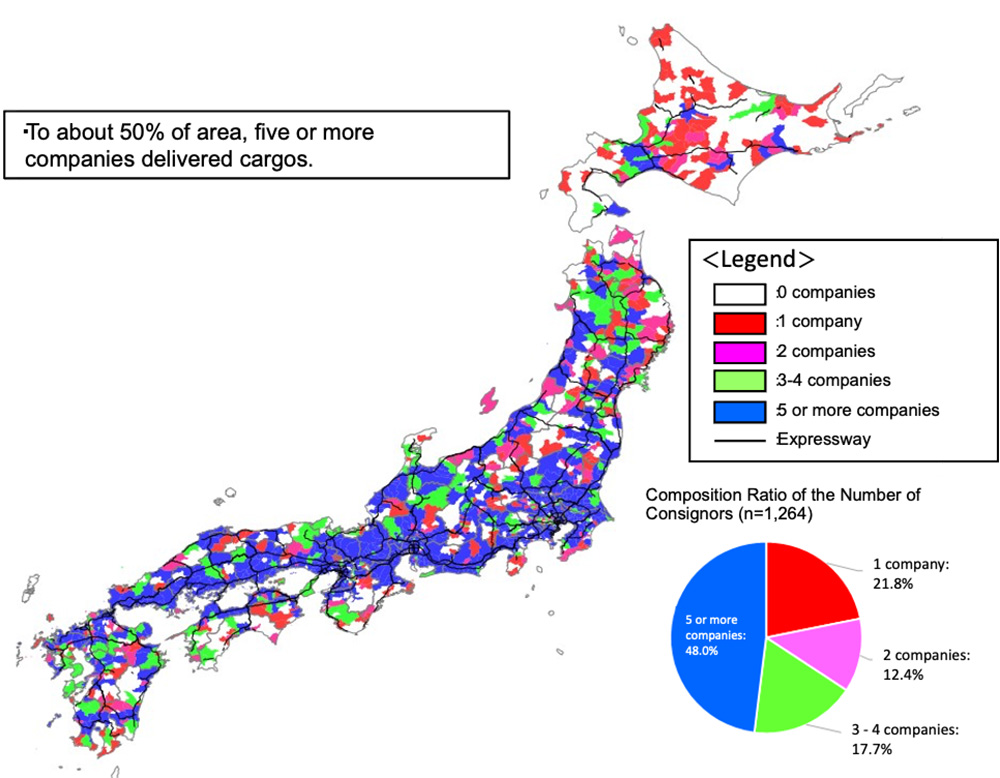 Figure 2: Number of Consignors by City, Town, and Village of Destination
Future Initiatives
Based on the results of this visualization, the Tohoku and Kyushu area, which has low transport density (few fixed-route arrivals relative to the area’s size (Figure 3)), and the Kansai area, which is a major demand center with high levels of intra-area transport, have been determined as priority areas for further analysis. Going forward, a total of 28 companies—consignors and logistics providers combined—will collaboratively work under the proactive leadership of the logistics providers to promote the planned initiatives. Consignors and logistics providers will also work together to design and verify logistics schemes with a view toward their implementation, including joint collection and delivery, joint warehousing, and the utilization of relay hubs in each area.
In addition, it is planned to implement measures previously developed by the Chemicals WG, such as the use of standard pallets, review of delivery lead times, and application of the Standard Guidelines for Chemicals Logistics Information*4, to accelerate the stabilization of medium- to long-term transportation and the implementation of joint logistics across the entire industry.
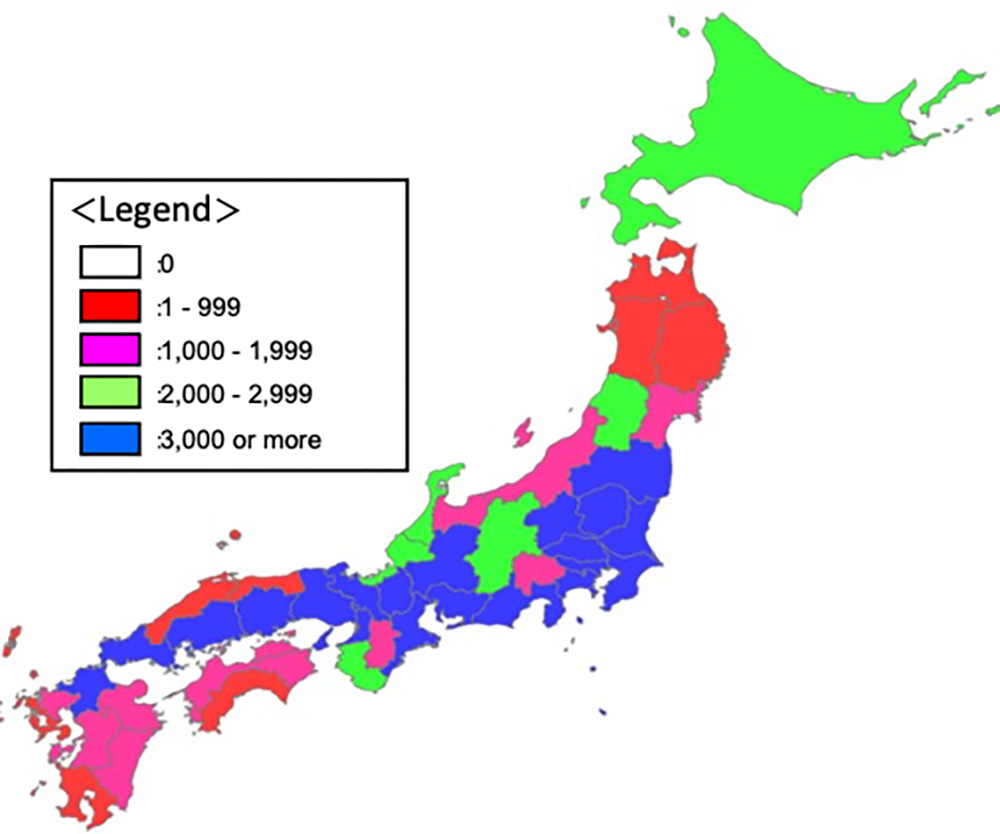 Figure 3: Number of Fixed-route
Comment by Professor YANO of Ryutsu Keizai University:
This project is a groundbreaking initiative aimed at visualizing the actual flow of specific freight across the entire industry and using that insight to develop new logistics schemes. Generally, because it is difficult to grasp the actual state of freight flow, discussions tend to be based on data from a single company or just a few companies. By gaining an overview of the industry as a whole, it has become clear that, for example, five or more companies are making separate deliveries to a particular city, town, or village. Exploring ways to bundle these deliveries and considering future possibilities for joint operations, including changes to logistics conditions such as revising lead times, represent a major step toward building a sustainable logistics system.
*1 Chemicals Working Group
Chairman: Professor YANO Yuji, Ryutsu Keizai University
Secretariat: Mitsubishi Chemical, Mitsui Chemicals, Tosoh, Toray
As of May 2026, participants in this working group include 87 member organizations (86 companies and one university), consisting primarily of consignors and logistics providers, along with the Japan Chemical Industry Association, the Japan Petrochemical Industry Association and relevant divisions within METI and MLIT.
Announcement on December 20, 2023: Voluntary Action Plan for the Proper Management and Productivity Improvement of Chemical Logistics
https://www.cas.go.jp/jp/seisaku/buturyu_kakushin/jk_pdf/28.pdf
*2 Physical Internet Realization Council
An organization established by METI and MLIT in October 2021 to formulate a roadmap for the realization of the Physical Internet in Japan.
https://www.meti.go.jp/shingikai/mono_info_service/physical_internet/index.html
*3 15 participating consignors
Asahi Kasei Corporation, ADEKA Corporation, Idemitsu Kosan Co., Ltd., Kuraray Co., Ltd., KH Neochem Co., Ltd., Sumika Logistics Co., Ltd., Sumitomo Chemical Co., Ltd., Daicel Corporation, Tosoh Corporation, Tokuyama Corporation, Nippon Shokubai Co., Ltd., Mitsui Chemicals, Inc., Mitsubishi Chemical Corporation, UBE Corporation, Resonac Corporation
*4 Standard Guidelines for Chemicals Logistics Information
Guidelines defining standard specifications for logistics information required when multiple consignors and logistics providers collaborate
■ References
- April 7, 2026, Physical Internet Implementation Council’s Chemicals Working Group to Promote Initiatives Toward the Proper Management of Truck Drivers’ Ancillary Work and Safety Improvements in Tanker Truck Loading and Unloading
https://jp.mitsuichemicals.com/en/release/2026/2026_0407/index.htm - March 24, 2026: Chemicals Working Group Demonstrates Collaborative Rail Freight, Confirming Feasibility of Continuous Round-Trip Operations With Same Container
https://jp.mitsuichemicals.com/en/release/2026/2026_0324/index.htm - February 19, 2026: The Physical Internet Realization Council’s Chemicals Working Group Initiates the Development of Guidelines to Promote Palletization
https://jp.mitsuichemicals.com/en/release/2026/2026_0324/index.htm - July 29, 2025: Industry Group Launches Collaborative Logistics Demonstration Test Using Rail Transport in Tokai and Chugoku Regions in Effort to Solve Logistics Issues in Chemical Industry
https://jp.mitsuichemicals.com/en/release/2025/2025_0729/index.htm - June 25, 2025: Physical Internet Realization Council’s Chemicals Working Group Reported the FY 2025 Action Policy
https://jp.mitsuichemicals.com/en/release/2025/2025_0625_1/index.htm - December 23, 2024: Physical Internet Realization Council’s Chemicals Working Group Runs Demonstration Test to Find Effects of Joint Logistics
https://jp.mitsuichemicals.com/en/release/2024/2024_1223_1/index.htm - June 11, 2024: Physical Internet Realization Council’s Chemicals Working Group to Conduct Demonstration Test for Collaborative Logistics in the Kanto and Tokai Regions (Japanese only)
https://jp.mitsuichemicals.com/jp/release/2024/2024_0611/index.htm - June 13, 2023: Establishment of a Chemicals Working Group in the Physical Internet Realization Council—Promoting joint logistics in the chemical industry to tackle the "2024 problem"
https://jp.mitsuichemicals.com/en/release/2023/2023_0613/index.htm